


It is often hard to determine what is guiding Donald Trump a month into the US and Israel's programme of strikes on Iran.
But it is apparent he has his attention fixed on the oil markets.
A word – or online message – from the American leader about his plans once would trigger significant moves in prices, as market participants leaped on signals the hostilities could worsen or conclude.
However, in the last week, market players are showing signs of growing more wary about the significance of his pronouncements.
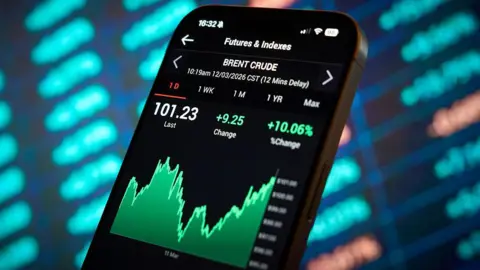
Oil was hovering around approximately $72 a barrel (bbl) prior to 28 February, when the military action against Iran started.
Last week, it reached a high of $118 a barrel on 19 March and by Friday afternoon was trading at just below $112 – significantly higher than its pre-conflict price.
Below are key instances from the last month where Trump and the financial markets appear to have reacted to each other – with differing impacts.
Use the navigation button to proceed to the next slide.
"Oil prices have become a proxy for broader political and financial uncertainties, jumping when Trump's tone becomes confrontational and easing when his comments softens," notes one financial expert.
He states that financial markets are understandably sensitive to those signals, considering the big macroeconomic threats that are associated with rising oil prices.
"Traders are trying to evaluate real uncertainty," he says. "The markets can look nervous or uncertain, but what they're actually attempting is navigating event risk in the moment, with oil sitting right at the core of that."
But, it can be difficult for traders to decide how to position themselves, especially since some of Trump's remarks seem designed to influencing oil prices, rather than articulating official strategy, notes another market commentator.
"As the saying goes, the initial victim of conflict is clarity," he says. "I suspect some of the dialogue back-and-forth around successful negotiations, and the opposite, very much are focused on merely shifting the price of oil."
Market Reactions Grow More Tempered
On Thursday, moments after US equity markets saw their sharpest fall since the start of the conflict with Iran, Trump stated talks with Iran were going "quite positively" and he was postponing military strikes on Iran's oil facilities until at least 6 April.
But, the price of crude proceeded to increase.
One currency strategist points out that market reactions are "showing less volatility" because of the "wide divergence" between Trump's reassurances and the lack of confirmation from Tehran.
"Given the appearances, a large number of market watchers can not see an quick conclusion to the conflict and markets remain anxious."
Another investment director notes markets have also become accustomed to Trump "frequently changing tack at indications of geopolitical, stock market or financial stress".
"There is a degree of scepticism, or even outright cynicism, creeping in at the margins," he concludes.


